


If you’re an NDIS provider in Australia, you’re operating in one of the most competitive and essential service sectors in the country. More than selling a service, you’re offering life-changing support. But here’s the reality: before a participant or a Support Coordinator ever picks up the phone to call you, they’ve already judged your capability based on your website.
At Volt Agency, we focus on design that actually works for the people using it—balancing technical performance with a layout that feels approachable and easy to understand. We know that for NDIS providers, a website isn’t just about looking modern. It’s also about accessibility, trust, and reducing the friction between someone needing help and actually receiving it.
Let’s look at the web design essentials that help NDIS providers connect with more participants and make their services easier to navigate.
1. Accessibility Isn’t Optional—It’s Your Brand
In many industries, web accessibility is a nice-to-have or a legal compliance checkbox. However, if you’re an NDIS provider, it is the core of your brand identity. If a person with a vision impairment or a motor disability can’t navigate your site, you've missed the opportunity to connect with the very people you’re here to support.
Following the Web Content Accessibility Guidelines (WCAG) 2.2 is key. This means ensuring high colour contrast for readability, keyboard-navigable menus, and alt-text for every image. But go beyond the technicalities. Manage cognitive load, too. For a neurodivergent user, a cluttered or chaotic layout isn’t just “messy”—it’s physically overwhelming and can make them click away instantly. You want a design that breathes, using white space to guide the eye and making sure the “Contact Us” button is exactly where they expect it to be, so they never have to go hunting for a way to reach out.
2. The Power of Clarity
The NDIS ecosystem is notorious for its jargon. Between “SDA,” “SIL,” “Plan Management,” and “LAC,” it’s easy for a participant to feel lost in a sea of acronyms.
Expert website design for an NDIS provider must prioritise clarity over sounding corporate. Your copy should be written in plain English. This doesn’t mean dumbing it down; it means making your services understandable at a glance. Use short sentences. Avoid the passive voice.
If you can explain a complex service in three sentences instead of six, do it. People looking for support are often already overwhelmed; the last thing they need is to land on a website that feels like another manual.
3. Trust-Building Through Transparency
Choosing a provider is an emotional and high-stakes decision for any family. You can’t expect people to take your word for it—they need to see that you’ve actually delivered on your promises for others. Sharing real stories and feedback is more than marketing; it’s about giving a new participant the peace of mind that they are making the right choice. However, in the Australian NDIS landscape, you have to be mindful of AHPRA and NDIS Commission guidelines regarding testimonials.
Instead of generic “Great service!” quotes, focus on case studies or “Stories of Impact.” Share how a participant started and how your specific support helped them hit a milestone, whether that’s gaining independence at home or connecting with their community. This shows your expertise in a way that feels relatable and human, rather than clinical and detached.
Make your NDIS Registered status or your commitment to the NDIS Code of Conduct front and centre. By making your compliance visible and easy to find, you’re proving that you don’t just care about the work—you care about being accountable for the quality of that care. It’s the simplest way to show you’re operating with integrity and staying fully aligned with the NDIS Quality and Safeguards Commission requirements.
4. Direct Pathways to Action
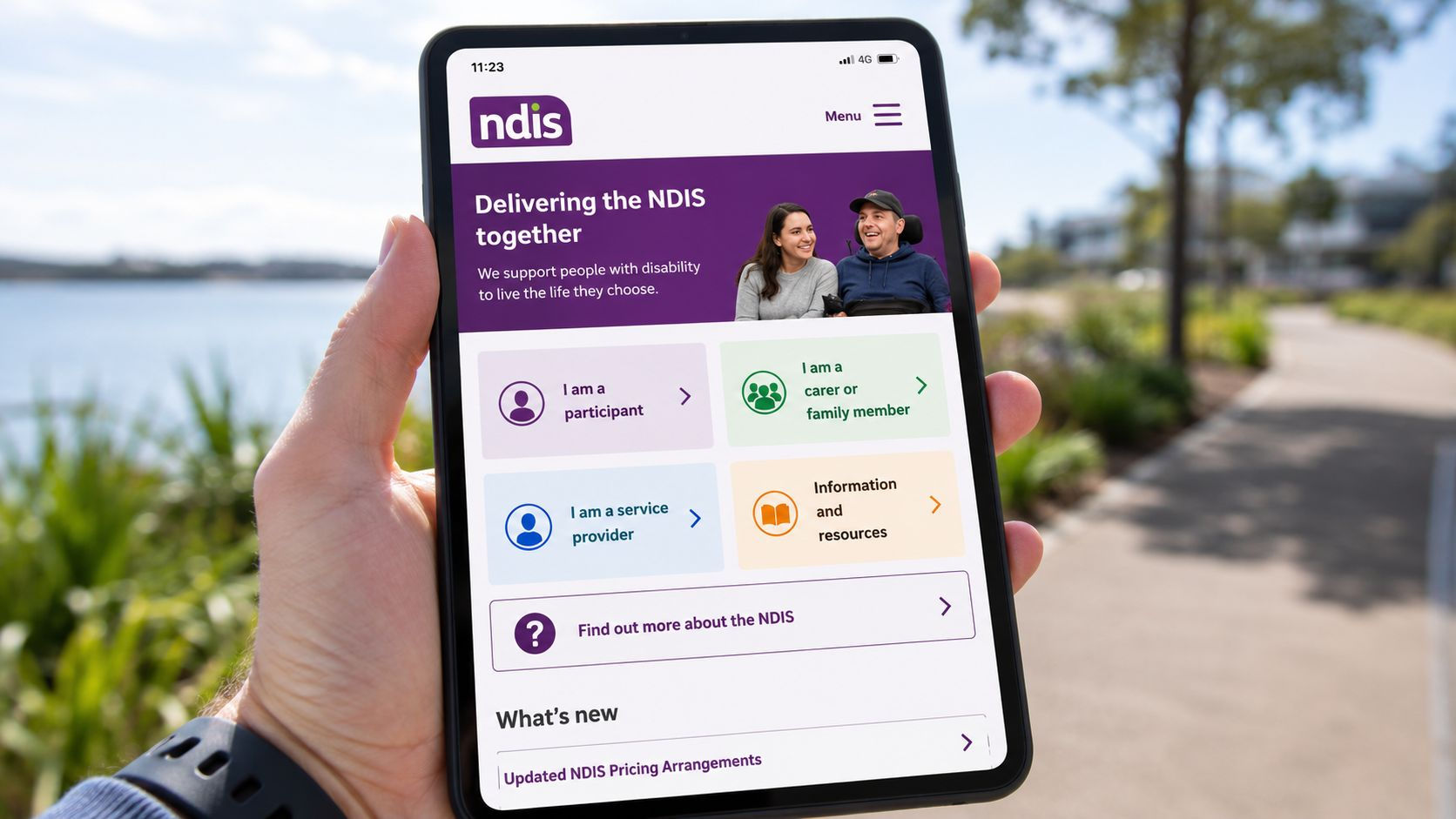
Many NDIS websites look like brochures—static, flat, and passive. A high-performance site needs to be an active tool for lead generation.
Don’t make people search for a way to get started. Use clear, actionable marketing strategies like:
- A “Refer a Participant” Portal: Make it incredibly easy for Support Coordinators to send you details securely.
- Service Area Maps: Use interactive maps or clear lists of LGAs you cover. There is nothing more frustrating for a user than reading a whole site only to realise you don’t service their suburb.
- Meet the Team: High-quality photos of your actual staff (not stock photos) build an immediate sense of familiarity and safety.
5. Mobile-First is a Must
Many participants and carers manage their NDIS plans on the go, often using tablets or smartphones during appointments. If your site takes ten seconds to load on a 4G connection or the buttons are too small to tap, you’re losing people. Build with a mobile-first mentality to ensure your website is accessible on any device, anywhere in Australia.
6. Integration and Automation
The technical side of your website should work as hard as your frontline staff. Consider integrating your site with your CRM or intake software. When someone fills out a form, it should automatically trigger a workflow in your office. This kind of automation ensures no lead falls through the cracks and your response time remains lightning-fast—a key differentiator in a crowded market.
7. SEO Matters
It’s not enough to have a beautiful site if participants can’t find you when they’re searching for local support. This means creating dedicated pages for specific locations (e.g., “NDIS Support Worker in Western Sydney”) rather than one generic service page. When a carer types “Disability transport near me” or “SDA accommodation in Brisbane” into Google, you want your specific service page to be the answer. In this case, SEO is all about being visible at the exact moment someone is looking for help.
Final Thoughts
Your website is often the first “support worker” in your company or organisation that a participant encounters. It should be as welcoming, capable, and accessible as the people you employ. By focusing on WCAG standards, clear communication, and frictionless user pathways, you can design and build a website that can serve as a gateway to better lives.
If you’re looking for an NDIS website builder that understands the nuance of the Australian disability sector and the power of high-performance design, let’s chat. At Volt Agency, we do more than build visually stunning websites—we build digital experiences that drive real-world results.


